
The 1965 half dollar silver content is one of the first things collectors check when they study early Kennedy halves. The answer is simple. The coin is not 90% silver like the 1964 half. It is a 40% silver-clad issue. That one change defines the whole coin.
This matters because 1965 sits at the break point. The old silver standard was gone. The half dollar still kept silver, but in reduced form. That gives the coin two sides of value. One is metal. The other is collector demand.
Why the 1965 Half Dollar Matters
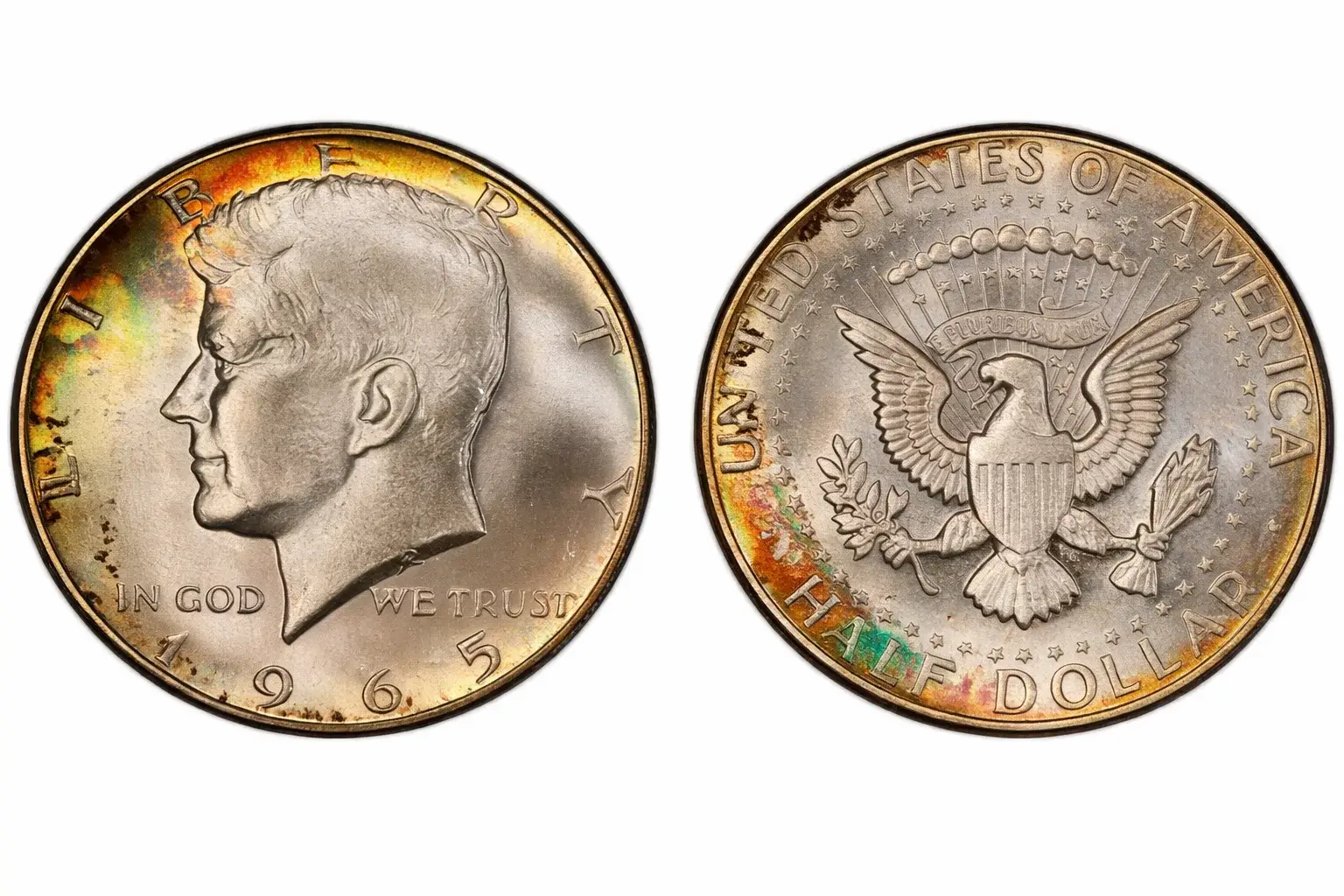
The 1965 Kennedy half dollar is the first regular issue of the 40% silver era. That alone gives it a clear place in the series.
It also creates confusion. Many collectors hear “silver Kennedy half” and treat 1964 and 1965 as near equals. They are not. The 1965 piece contains much less silver. It also trades differently.
There is another point. The coin has no mint mark. For 1965, that is normal. Mint marks were removed from coins for a period after the Coinage Act changes. A missing mint mark on a 1965 half is not a rarity point.
Why collectors still pay attention to it
- First year of the 40% silver-clad format
- Part of the silver Kennedy run from 1965 to 1970
- Common enough to study, but still tied to silver value
- Available as both regular strike and SMS
- Often misunderstood by newer buyers
The Short Answer
The basic numbers are easy to remember.
| Coin | Silver content | Weight | Actual silver weight |
| 1965 Kennedy half dollar | 40% silver | 11.50 g | 0.1479 troy oz |
| 1964 Kennedy half dollar | 90% silver | 12.50 g | 0.3617 troy oz |
| 1971 Kennedy half dollar | no silver in regular issues | 11.34 g | 0 |
That is the clean answer. A 1965 half dollar contains 0.1479 troy ounce of silver. That is the number that matters when melt value enters the discussion.
What 40% Silver Really Means
The coin is not a simple solid mix in the way beginners often imagine. It is a layered silver-clad coin.
The outer layers contain more silver. The inner core contains less. The result is a coin with a total silver content of 40%. This structure kept much of the old silver look while cutting the total silver load.
That is why the 1965 half still belongs to the silver side of the series. It is also why it should never be treated like a 1964 half.
In plain terms
- 1964 half dollar = old 90% silver standard
- 1965 half dollar = reduced silver, silver-clad format
- 1971 and later regular issues = no silver at all
Percentage and Silver Weight Are Not The Same Thing
This is where many weak articles stop too early. “40% silver” is not enough on its own. The better figure is the actual silver weight.
A 1964 half is 90% silver and much heavier in silver. A 1965 half is 40% silver and carries far less metal value. Both are silver coins. They are not in the same bullion class.
That difference matters in real use:
- Melt value is lower on the 1965 half
- Dealer buy prices are different
- The collector’s perception is different
- Stacking appeal is different
This is why serious collectors do not stop at the percentage. They check the real silver load.
1964 vs 1965 vs 1971
A quick comparison makes the transition much easier to see.
| Year | Composition | What it means |
| 1964 | 90% silver, 10% copper | full traditional silver half |
| 1965 | 40% silver-clad | transition-year silver half |
| 1971 | copper-nickel clad | regular non-silver issue |
This table does most of the work. The 1965 coin is not the last old silver half. It is the first reduced-silver half.
Melt Value: What The Silver Is Worth
For a worn 1965 half dollar, silver content often sets the floor. That does not mean every coin trades exactly at melt. It means the metal value is the first number many buyers think about.
The simple formula is:
actual silver weight × current silver price = approximate melt value
For example:
| Silver spot price | Approximate melt value of a 1965 half |
| $25/oz | about $3.70 |
| $30/oz | about $4.44 |
| $35/oz | about $5.18 |
These are rough metal values. They are not full market prices. Dealer spreads, local demand, and coin condition still matter.
This point is important. Melt value gives the base. It does not explain the whole coin.
When Melt Value Is Enough
Sometimes the metal story is almost the whole story.
That usually happens when the coin is:
- Circulated
- Common in appearance
- Dark, dull, or marked
- Not an SMS coin
- Not in high Mint State
In that situation, silver content carries most of the value.
When The Melt Value Is Not Enough
A 1965 half dollar can move above its silver value. The jump usually comes from one of three things:
1. Better grade
High-grade regular strikes are scarcer than average pieces. Clean coins with stronger luster bring more interest.
2. Better surfaces
Scratches, haze, and dull fields drag modern silver-clad coins down fast. Cleaner pieces stand out.
3. SMS format
This is the most important split within the date.
Regular Strike vs SMS
A strong article on this coin must separate the two markets.
Regular strike
This is the standard 1965 half made for circulation. It is the coin most people mean when they mention a 1965 Kennedy half.
The regular strike market usually starts with:
- silver value
- wear level
- eye appeal
- grade if uncirculated
SMS
1965 also has a Special Mint Set half dollar. This is not a proof. It is not a normal circulation strike either. The finish is different. The market treats it differently.
SMS coins usually attract attention for:
- Cleaner surfaces
- Stronger presentation
- Set demand
- Higher-grade collecting
| Type | Silver content | Main value driver | Market position |
| Regular strike | 40% silver | melt + condition | common silver issue |
| SMS | 40% silver | finish + quality + grade | collector-focused issue |
This split matters. Two coins can have the same silver content and still sell in very different ranges.
How to Identify the Coin Correctly
The first step is the date. The second is the format.
Quick identification checklist
- Is the date 1965?
- Is it a Kennedy half dollar?
- Is there no mint mark? That is normal.
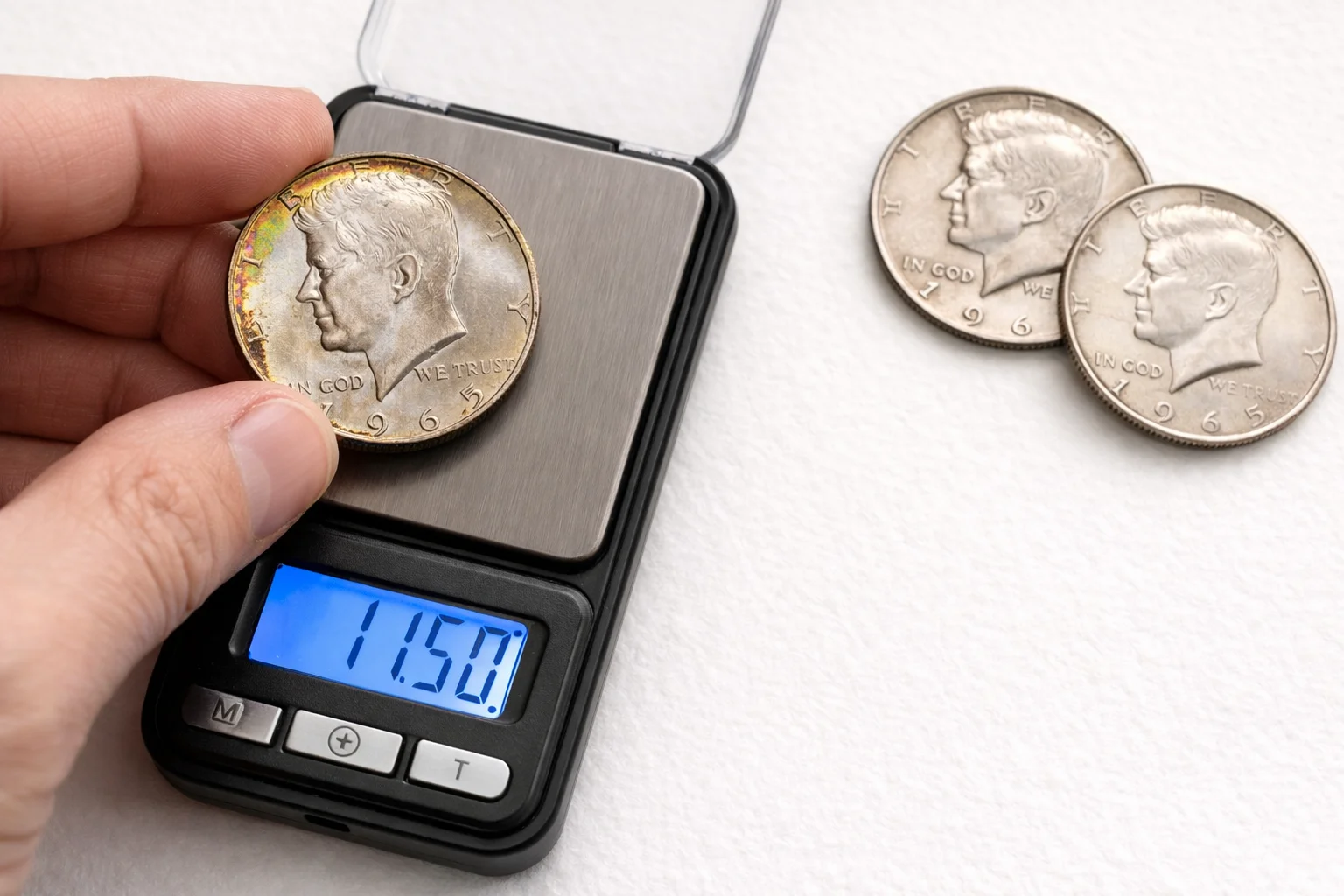
- Does the weight fit the 11.50 g standard?
- Is it a regular strike or an SMS coin?
- Are you judging silver value or collector value?
Do not rely on color alone. Toning can mislead. A coin can look silver and still need a date and weight check.
Common Mistakes
Most bad estimates come from the same few errors.
Mistake 1: calling it a 90% silver coin
Wrong. The 1965 half is 40% silver-clad.
Mistake 2: treating all silver Kennedy halves the same
Wrong again. 1964, 1965–1970, and later issues belong to different metal groups.
Mistake 3: using melt as the final price
Melt is a floor, not a full answer.
Mistake 4: ignoring SMS coins
That removes an important part of the 1965 market.
Mistake 5: treating “no mint mark” as special
For this date, it is normal.
Where a quick App Check Helps
A coin value checker app is useful at the first stage. It helps confirm the date, type, and general value lane before deeper checking.
This is where Coin ID Scanner can be practical. The app identifies coins from a photo, builds a coin card, shows basic parameters like composition and denomination, and lets the user save coins into a collection. That makes it useful for sorting silver halves, separating regular issues from better pieces, and keeping track of finds without mixing them into bulk silver.
That is the right use for an app here. Fast sorting first. Closer judgment after that.
Who Should Keep a 1965 Half Dollar
The coin still makes sense in several collections.
Worth keeping if:
- You collect Kennedy halves by date
- You want a representative 40% silver issue
- You build a small silver group by type
- The coin is an SMS example
- The piece is clean and above average
This is not a dramatic rarity. It is a practical, important coin. It marks the start of a new phase in the Kennedy half series.
Conclusion
The answer is direct. The 1965 Kennedy half dollar contains real silver, but not at the old 90% level. It is a 40% silver-clad coin with 0.1479 troy ounce of silver. That explains the metal side.
The market side is different. Grade matters. Surfaces matter. SMS matters. A worn regular strike may trade close to the silver value. A better coin can move higher.A free coin identifier and value app can help with the first check. It cannot replace the coin itself. The real answer still comes from composition, format, condition, and market level.