
The United States government stopped printing and circulating the 1000 Dollar bill, a bill issued by the Federal Reserve System, as part of a large effort to update the country’s money system.
The final decision to remove high-value paper money, like the $500, $1000, $5000, and $10000 bills, came in the year 1969.

Even though the government had stopped printing these specific banknotes much earlier than that time, the Federal Reserve System started the careful process of taking them out of circulation in 1969.
These steps were a direct answer to big changes happening in money matters, technology, and laws, making the continued use of large paper bills not helpful and even making it harder to keep the country safe and secure financially.
History of the High-Value Bills
Before we look at the reasons for stopping the bill, it is useful to understand why the bills were created in the first place, helping us see their original purpose.
Large dollar amounts were first used in the U.S. at different times, starting back in the 1800s.
- Their main job was not to be used for everyday shopping or buying things by regular people, focusing instead on big money moves between banks, helping with large payments between the central bank and the government treasury, and making large business deals easier, with many of those deals often needing a physical exchange of cash in those times.
Through the years, the government printed not only Federal Reserve Notes but also gold certificates and bank notes, having a face value of up to $1000.
Therefore, the high value of the money was put in place because the financial world needed an easy way to store and move large amounts of money quickly.
The last set of the $1000 banknotes, which were not gold certificates, was printed near the end of the year 1945.
Changes in Banking Technology
The first and most basic reason causing the $1000 banknote to become old news is the growth of ways to pay and bank using technology.
Before electronic systems were everywhere, moving big sums of money meant either moving precious metals or transporting many paper bills.
However, starting around the middle of the 20th century, the finance world in the U.S. went through a big change, starting to use computers and digital methods.
- Banks started using checks and money orders a lot more, helping people and businesses move money safely.
- The way banks talk to each other changed, with systems like Fedwire coming into use, allowing banks to send huge amounts of money instantly and safely using computers.
- The Automated Clearing House, or ACH, was started, allowing large numbers of regular, planned money moves to happen easily.
These new computer-based systems offered a much better level of safety, speed, and, making the biggest difference, clarity for all major money moves.
- When a bank could send a billion dollars in just a few seconds, creating a complete digital history and record, the need to physically move large piles of $1000 bills for the same work completely went away.
Using large banknotes became pointless and inefficient when considering the difficulty of moving and managing them inside bank operations.
Fighting Crime and Dirty Money
The single most important reason leading to the $1000 banknote being stopped was its usefulness for bad guys.
The U.S. government, especially from the 1960s onward, started to increase its actions against organized crime and finance-related lawbreaking.
Large bills are a perfect tool for people washing dirty money, allowing them to pack a huge amount of bill or coin value into a small, light package.
- One million dollars in $1000 bills takes up much less room than the same million dollars in $100 bills, making it extremely easy to move and hide money coming from illegal acts.
- The small size makes it simpler to sneak the money across borders and keep the assets hidden from police and law enforcement groups.
- Large amounts of money on these bills allow people to keep their identity secret when making big deals, because the cash flow does not leave a digital trail or paper record that anyone can follow.
To fight against this problem, the government decided to watch money movements more closely.
As a part of this plan, the Federal Reserve System made the official choice to stop all bills above the $100 amount.
The main purpose of this choice was to force criminals to use either smaller bills, which are harder to hide and move, or to use electronic systems, needing official reporting and checks according to the Bank Secrecy Act and later laws.
Any cash payment going over a certain amount, for example, $10,000, must be reported to the IRS, making the work of crime groups much harder.
Taking the $1000 bills out of circulation was a clever way to make moving illegal money more difficult and raise the chances of bad guys getting caught.
People Did Not Need Them
Another reason that helped stop the circulation of the $1000 bill was that regular people did not truly need the money.
The large majority of Americans never held a bill of that value, and their regular, or even somewhat large, daily spending was easily paid for with $20, $50, and $100 bills.
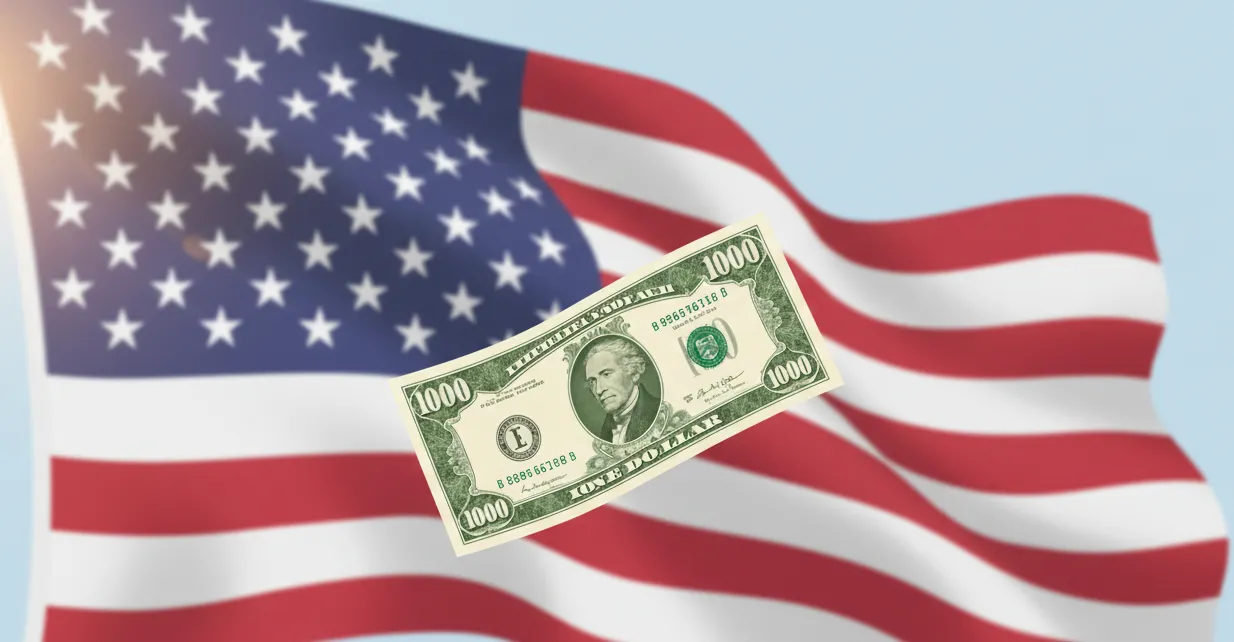
The $1000 bill was not a piece of money used by everyone, remaining only a tool for the finance world.
When the finance world moved to electronic transfers, there was no longer a need for such a high-value bill for general use.
- In fact, the expense of printing, keeping, and managing these bills, which hardly moved among the public and were only used by a few people, became too much.
Removing these bills lets the Federal Reserve System spend its money and time on printing and keeping the bills that people use most often.
Official Moves by the Federal Reserve System
The action of taking the bills out of use was slow and careful. Though the printing of the bills stopped in 1945, the bills were still legal to use for payment.
- The deciding step was taken in 1969.
That year, the head of the Federal Reserve System, William McChesney Martin Jr., announced that the $500, $1000, $5000, and $10000 bills would no longer be put back into use.
This meant that any bill of these high values that came back to the Federal Reserve System, for example, through deposits at regular banks, would be destroyed right away instead of being sent out again.
Even so, the $1000 bills that people still have, like collectors, are still legal money, though their value to collectors is much bigger than the face value printed on the bill, and such bills can be easily checked with a coin identifier app free.
So, stopping the circulation was not the end of the bill’s value but a planned effort to destroy the physical bills as they slowly returned to the main bank.
| Face Value | Person on the Bill | Last Print Date | Year the Removal Began |
| $500 | William McKinley | 1945 | 1969 |
| $1000 | Grover Cleveland | 1945 | 1969 |
| $5000 | James Madison | 1945 | 1969 |
| $10000 | Salmon Chase | 1945 | 1969 |
Looking closer at the issue of fighting crime gives us a better picture, since this part was a major reason for the 1969 decision.
Governments worldwide understand that not knowing who holds the cash is the biggest block to finding illegal funding.
For the $1000 banknote, one million dollars weighs only about two pounds.
This small size makes it simple to move huge amounts of cash without being seen by border security, leaving no clues in bank systems, and not needing to tell government workers anything.
This was helping crime groups, which included people selling drugs, stealing money, moving weapons, and doing other illegal things, to move their crime money without trouble.
Since the official removal of the high-value bills, the $100 bill is the largest one left.
This created a large increase in the amount and weight of cash that criminals must move for the same amount of money.
- The growth of the physical size of the cash created more problems for criminals in moving it, making it riskier to transport, and making the process of washing the money harder and more costly.
- Therefore, the stopping of the $1000 bill, along with the other large bills, was part of a big plan to close holes in the money system oversight and make national money control stronger.
The government used this step as an indirect way of controlling things, making illegal cash transactions physically difficult and raising the chance of being caught.
Conclusion
The reasons for stopping the printing and circulation of the $1000 banknote fall into two main areas that work together.
The first is that the bill became old news because of the move to fast and clear electronic systems for banks to pay each other.
The second, and most important reason, is the clear government plan to fight finance-related lawbreaking.
The banknote, first created to make legal bank deals simple, turned into a useful tool for crime because it put a lot of money into a small size.
The 1969 decision was a smart move, aimed at taking this tool away from the hidden economy and making the money oversight system stronger, using the smaller and heavier $100 bill as the highest amount people could get.